
I often hear, “Why aren’t kids learning life skills at school?” The reality is complex, as some schools can impart these skills while others struggle due to limited resources and insufficient staffing. School counselors teach life skills as part of their curriculum; however, despite the American School Counseling Association’s (ASCA) recommended student-to-school-counselor ratio of 1:250, the actual ratios often remain high, with one school counselor for every 408 students, leaving many students underserved.
Having devoted a decade to school counseling, I understand the challenges of aligning programs with ASCA standards amid high caseloads and “other duties as assigned.” Leading small groups is one of my favorite activities and is incredibly impactful for students, but the process of piecing together ideas, materials, and documents is often draining and time-consuming. To remedy this, I began collaborating with the National Center for Youth Issues (NCYI) last year to develop a comprehensive workbook, streamlining resources for group facilitators.
And now, it’s finally ready!
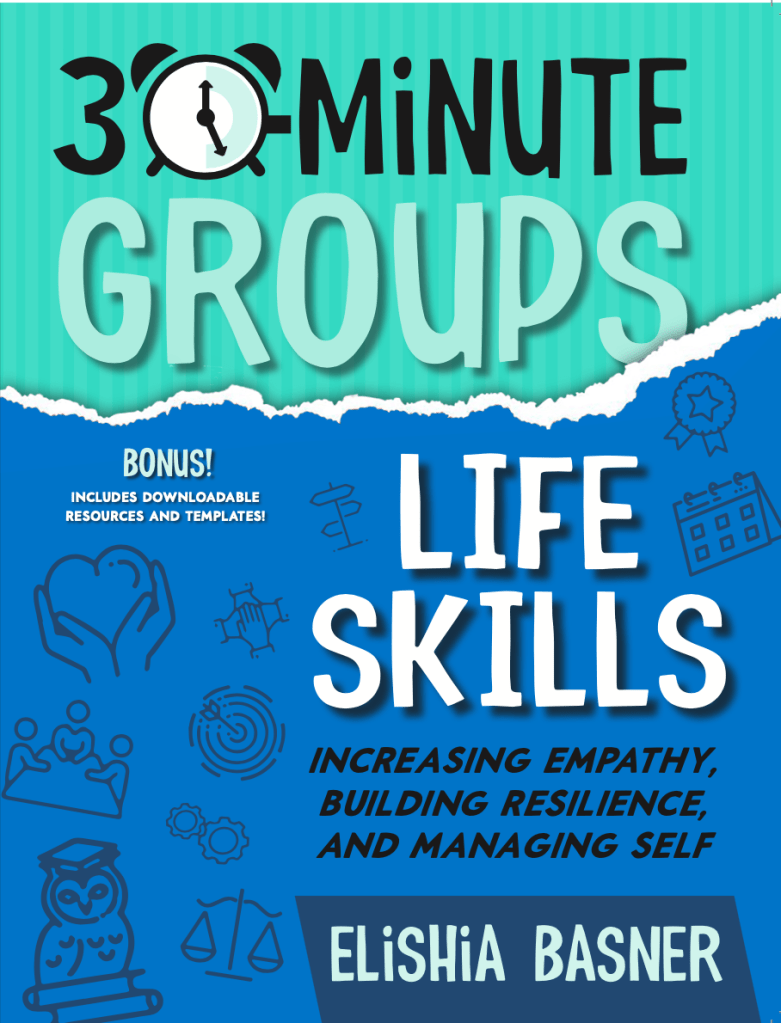
I created “30-Minute Groups: Life Skills” to help school counselors and educators explicitly teach children how to be kind friends, keep calm, and persevere when life is challenging.
Topics include:
- Forgiveness
- Honesty
- Kindness
- Patience
- Perseverance
- Respect
- Responsibility
- Compassion
- Friendship
- Gratitude
Tailored for 2nd through 8th graders, the Life Skills curriculum provides a 30-minute group format with ten core lessons. Each session features a short story, reflective questions, and engaging activities—all without the need for extra materials. Facilitators receive a guide for an optional pre-group survey session to set expectations and foster hope, as well as a final session for post-group surveys and a celebratory certificate of completion ceremony.
The lessons align with ASCA student behavior standards, and the small group action plan smoothly transitions to the official ASCA form. Emphasizing the importance of using data to inform your programming, I’ve incorporated template examples to guide users in collecting data for program assessment and provided blank templates to simplify sharing data with collaborators.
Inside, you’ll find:
- 10 Complete Lessons with ASCA Standards
- Options for an initial and closing session
- Permission and Completion Letters to send to caregivers
- Attendance Logs
- Small Group Rules
- Pre-and Post-Surveys to measure the success of the programming
- Results Template to share with interested parties
- Small Group Action Plan Guide
My hope is that through “30-Minute Groups: Life Skills,” children can cultivate new friendships, improve academic skills, and gain tools to manage their emotions effectively. I love leading small groups because they allow me to connect with my students and witness firsthand the application of their newfound skills. Groups can be impactful experiences for children, and I hope that if you choose to facilitate these groups, you’ll enjoy them as much as I do.
 THE FEELINGS LADY